“Reformation without tarrying”


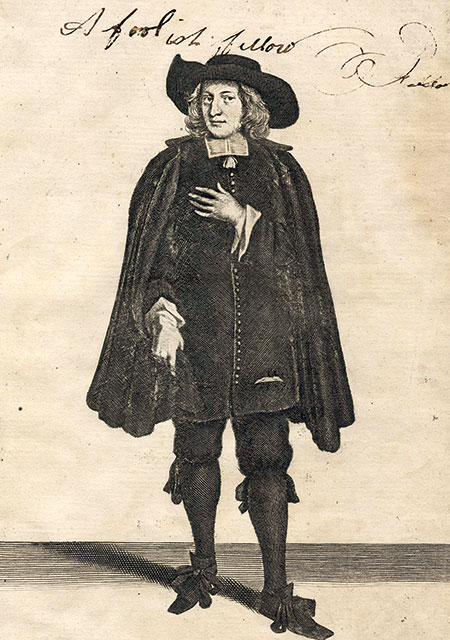
(ABOVE: M. Lauron (delin.) & P. Tempest (exc.), A nonconformist minister, c. [1711] (engraving)—Public domain, William L. Clements Library Image Bank 1686, University of Michigan Library Digital Collections)
In sixteenth-century England, no one belonged to a denomination: “church” and “nation” were two different names for the same group of people. “Recusants,” or Christians who refused to take part in the national church, faced fines and imprisonment.
Most recusants were Roman Catholics, but by the 1580s, some of the most radical Puritans were worshiping in “Separatist” congregations in London and Norwich. The Norwich community’s leader, Robert Browne (c. 1550–1633), gave his name to the Separatist movement (Brownists) and wrote the most famous treatise defending the formation of churches not authorized by the state: A Treatise of Reformation Without Tarrying for Any (1582).
Elizabethan Separatists were a tiny minority but regarded as dangerous extremists. While Browne led his followers to the Netherlands, he later returned to England and reconciled with the established church. After London Separatist leaders John Greenwood and Henry Barrow persisted in dissent and were executed in 1593, others, such as John Robinson (1576–1625), John Smyth (1554–1612), and Thomas Helwys (1575–1616), also migrated to the Netherlands early in the 1600s. Robinson’s Separatist congregation migrated from the Netherlands to New England on the Mayflower in 1620, where they eventually joined other Puritans in setting up a different kind of state church across the Atlantic.
Smyth and Helwys moved in a different direction. Influenced by Dutch Mennonites, they rejected infant baptism and became the first Baptists. Smyth eventually joined the Mennonites, while Helwys returned to England, dying in prison around 1616. Helwys brought back from the Netherlands an Arminian view of salvation that would define the General Baptist tradition. Much later, in the 1640s, other English Separatists also rejected infant baptism while remaining Calvinists, becoming known as Particular Baptists.
SPLINTER CELLS
In 1642 war broke out in England between king and Parliament (see pp. 15–17). In 1643, as war still raged, Parliament called a church council, the Westminster Assembly. With Scottish Presbyterian participation, it drew up a confession of faith and a plan for a state church that would make England look more like Presbyterian Scotland. However, the Parliamentary army was dominated by more radical Independents and, after the execution of King Charles in 1649, imposed its own religious settlement that largely ignored Westminster.
Under the Commonwealth, which lasted until 1660, local parishes functioned independently and dissenting groups proliferated. Both groups of Baptists flourished, alongside even more radically egalitarian groups such as Quakers and Levellers. Meanwhile the Book of Common Prayer was banned, and now those loyal to it were the ones who had to worship in secret.
After 1662 Separatism was no longer a fringe position. Mainstream Puritans adopted it by force of necessity after the Restoration of 1660. These “Nonconformists” split into Presbyterian and Congregationalist factions, alongside the two groups of Baptists and the mystical, pacifist Quakers. Presbyterians, Congregationalists, and Particular Baptists shared Calvinist confessions of faith based on the Westminster Assembly’s work of the 1640s.
Under the Restoration, Nonconformists could not hold government office or teach. (In 1662 all dissenting ministers were ejected from Parliament, resulting in the formation of dissenting churches.) The Conventicle Act of 1664 forbade gatherings of more than five unrelated people for worship. The Quakers suffered most due to their rejection of all hierarchy and of war and their habit of disrupting Anglican worship. James II granted toleration to both Nonconformist Protestants and Roman Catholics in 1687, but this led to his overthrow in 1688.
TOLERANT ANGLICANISM
In 1689 Parliament passed the Act of Toleration, allowing Protestant dissenters to worship freely and to operate their own schools (as long as they swore allegiance to the Crown), but still excluded them from public office and the universities. From this point on, dissenting churches had a secure place within English society, though not full equality before the law (which would have to wait until the nineteenth century). Even so, over the centuries, the Church of England learned to accept the existence of multiple parallel religious communities.
By Edwin Woodruff Tait
[Christian History originally published this article in Christian History Issue #160.0 in 2026]
Edwin Woodruff Tait, contributing editor to CHNext articles
Generations upon generations
From a single settlement to a national power: the Episcopal Church in America
Jennifer Woodruff Tait

To the ends of the earth and back again
How Anglican missionaries spread the Gospel both near and far
Jonathan S. Riches
No poet is an island
Some writers whose Anglican faith was central to their work
Karen Swallow Prior