

Loest Took His DESPERATE Need to a Rich, Loving Master


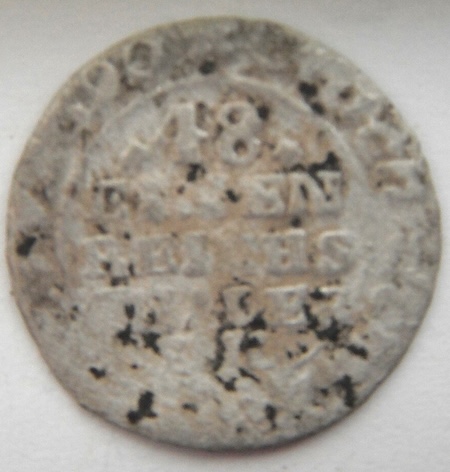
(ABOVE: Thaler circa 1760—The Portable Antiquities Scheme / The Trustees of the British Museum / [CC-BY-SA 4.0] Wikimedia)
GOD OFTEN INTERVENES in human affairs in answer to prayer. These daily stories furnish examples of healing, protection, heavenly guidance, and of needs met. The story of John Daniel Loest shows God’s assistance in business.
Loest, who was born on this day, 28 March 1759, became a tradesman in Berlin. Reared in a pious home, he acted on scriptural values in his shop which sold fringes and trimmings. Enterprise in Prussia was mostly done by bills of credit; any trusted and active tradesman had many creditors. Such was the case with Loest. His expenditures weren’t risky—his assets exceeded what he owed, but much of his worth was tied up in property that he couldn’t easily convert into cash.
At the request of a friend, he stood security for 600 thalers* on behalf of a woman with large estates to help her over a temporary money crunch. He was assured by the woman’s professedly-Christian lawyer that his security would be dismissed when anticipated revenues arrived. The story was a lie. Both Loest and his friend, not knowing the woman personally, had been tricked. The woman’s estate was submerged in debt. A biographer suggested that Loest had forgotten the warning of Proverbs 11:15. Loest discovered the fraud when, late one week, a court ordered him to pay the secured debt by the following Tuesday.
To come up with the amount in so few days seemed out of the question, especially since he already needed to repay 300 thalers by the end of the next week. He turned to business friends, but each, before hearing what he had to say, asked him to repay money he owed them. One asked for payment by Wednesday, another by Thursday, another by Friday, and another by Saturday morning, which meant he had to repay two loans on Saturday. Instead of owing 600 thalers, he found himself obliged to fork up 2,600 thalers within one week.
Desperate, he turned to a moneylender. “You in money difficulties, or any difficulties Mr. Loest!” exclaimed the moneylender. “I cannot believe it! You are at all times and in all places boasting that you have a rich and loving MASTER! Why don’t you apply to him now?”
“You are right and I am wrong,” replied Loest. He went home, kneeled down, and laid his difficulties before the Lord. He rose with an inner assurance that the Lord would supply. He said nothing to anyone about his predicament, not even to his sister or a servant, both of whom lived with him.
On Monday business was brisk. He earned enough to make Tuesday’s payment. The same happened Tuesday so that Wednesday’s debt was paid. All week, people who knew nothing of his predicament entered his shop to repay old debts. Business remained so brisk that the three residents at the shop could barely snatch lunch. By Friday Loest’s entire stock was sold. He had enough money to pay Saturday morning’s obligation but none for the debt due Saturday evening and no idea where it could come from. He determined not to fret but to trust the Lord as the hours ticked by.
Minutes before his evening debt was due, an old woman entered the shop and asked for a favor. She had inherited a sum of money and couldn’t sleep for fear it wasn’t safe in her hovel. Would he handle the money for her? It was exactly the 300 thalers he needed. Loest gave her a receipt.
The following week his stock was miraculously replenished. A friend emigrating from Prussia asked him to assume a large inventory. Loest said he would love to, but that he had no money to buy the goods. The friend dismissed the objection. He trusted Loest, he said, and knew he would repay promptly. Loest did pay off the stock within two years. He credited the Lord for his happy escape. Impressed by Loest’s character and God’s faithful care, the Berlin Tract Society published his story, thirty-four years after the merchant’s death on 8 January 1821.**
—Dan Graves
* Between 1750 and 1857, a Prussian thaler contained 16.7 grams of fine silver, about 0.54 of a troy ounce. It seems 600 thalers would be about $20,000 in 2026. If a numismatic reader knows otherwise, please correct me.
** In preparing these stories, I try to verify details from multiple sources. Although Loest’s story has appeared in several English-language publications, all derive from the same Berlin tract. I found a German source that confirms the English sources with additional details, but whether or not it is based on the Berlin tract I couldn’t determine.
Other Events on this Day
- Rabban Bar Sauma from China Visited Rome at Easter
- ELIZABETH RUNDLE CHARLES PROTECTED HER PRIVACY WITH A PSEUDONYM