The gospellers


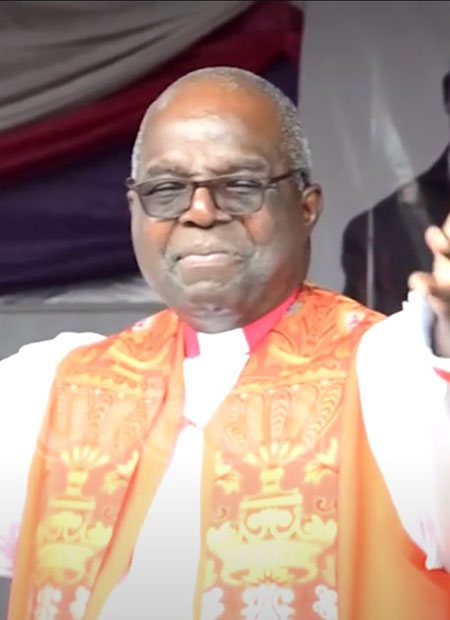
(ABOVE: Archbishop Henry Luke Orombi of the Church of Uganda 12 March 2023 You Tube / Urban TV Uganda / [CC-BY-SA 3.0] Wikimedia)
In the context of worldwide Christianity, modern African Anglicanism has come to define the future of global Anglican orthodoxy. Particularly African Anglicanism was and is a key contributor to the shift of Christian leadership to the Global South.
How did African Anglicanism become so influential in the international Christian community? Three factors have shaped its emergence and form of expression in the continent and consequently, around the world: the gospeller, the gospel experience, and the gospel historical movement among the African people.
SOWING GOOD NEWS
The term “gospeller” refers to the human instrument: the people who transmitted the gospel to diverse communities in Africa. While the theological foundation of African Anglicanism is rooted in the 39 Articles of Religion, the growth and expansion motive came from missionary movements through colonial pathways in the eighteenth and nineteenth centuries.
In Nigeria, Sierra Leone, and Kenya, Church Missionary Society (CMS) missionaries focused on indigenous people rather than serving as chaplains to British settlers, encouraging local populations to take the lead and evangelize their communities. Anglican mission enterprise, as early as the eighteenth century, gradually expanded from White-led churches to indigenous leadership, as in the ministry of Bishop Ajayi Crowther (see pp. 34–36). African evangelical Anglican theology today was sown in Africa and beyond by these gospellers.
In many instances across African communities, the gospel experiences of the various missionary societies were resistance stories. Their efforts were fraught with spiritual and sociocultural obstacles and struggles. Early converts in these contexts saw how the power of the gospel disarmed ancient spiritual strongholds in their communities. The missionaries were often given “evil forests” to evangelize—areas believed to be possessed by gods and forbidden for humans to transverse. But instead of the missionaries dying due to human transgression, the evil forests were “redeemed.” They became centers of civilization in many of those ancient communities and remain so today. The transforming power of the gospel became the propelling motivation for the indigenous gospel movement.
REAPING A HOMEGROWN HARVEST
By the nineteenth century, the Anglican Church in Africa became indigenous because of the gospel historical movement—a missions movement in which African Anglicans became self-governing, self-supporting, and self-propagating. Indigenous Anglican congregations in the Niger delta area spread the gospel faithfully. At the heart of this missionary zeal was a strong commitment to biblical authority and evangelism.
This zeal continues today as modern African Anglicanism remains a strong voice among conservative evangelicals in the global Anglican Communion. African Anglicans also serve as key leaders within GAFCON, uniting conservatives committed to biblical authority.
Indeed the Anglican Communion stands to gain unique spiritual vibrancy and resilience from these modern African Anglicans, whose passion for cultivating the Good News at home and around the world has resulted in a massive, homegrown harvest, ripe for the reaping.
By Olayemi O. T. Fatusi
[Christian History originally published this article in Christian History Issue #160.0 in 2026]
Olayemi O. T. Fatusi, dean, St. Francis of Assisi Theological College, vicar, St. Philip Anglican Church GwarinpaNext articles
Recommended resources: Anglicans
Discover the history of the Anglicans—in England, the United States, and worldwide—with these resources recommended by our editors and authors.
the editoris
Questions for reflection: Anglicans
Use these questions to help guide your understanding of the Anglican story.
the editors