What is an Anglican?


A sneak peek into our next issue
What is an Anglican?
In our next issue of Christian History, we explore this complicated question. By studying Anglicans across history and continents, we trace how Anglicanism changed and grew from England’s state church to the sprawling and influential body of churches it is today. Subscribe for free today to “Meet the Anglicans” in our upcoming issue.
While you will have to read the full issue to meet many Anglicans from history, this recent experience meeting a small group of Anglicans helps describe a few of the many ways to be an Anglican today.
This July my husband and I visited his English grandparents on their farm in North Wales. Though they prefer to attend evangelical Vineyard Churches, there are none near their home in Llanrhaeadr-ym-Mochnant. They suggested we check out a weekday service they occasionally attend at a local parish in the Church in Wales, which is part of the Anglican Communion.
We drove through a beautiful valley down a very narrow lane lined with hedges. Dodging pheasants and one plump sheep, we parked outside the graveyard as the bells rang noonday. This Thursday Eucharist was celebrated at the Shrine Church of St. Melangell. We sat in a pew and noticed a few stone images of hares lining the nave. (Read the story of Melangell here to see why this was unsurprising.)
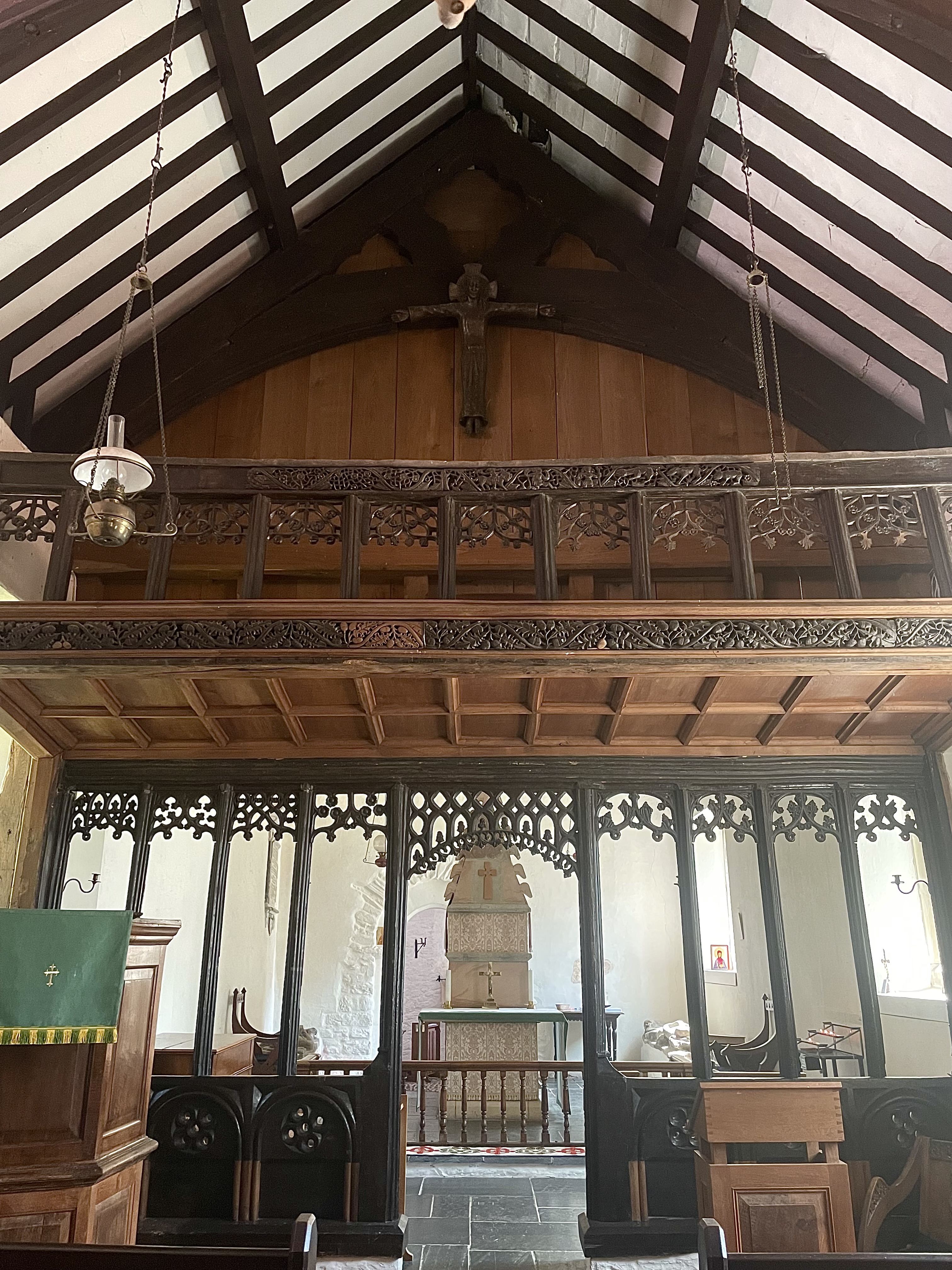
Behind the beautiful and simple altar was a shrine, and behind that the grave of a woman, likely Melangell, an abbess from the 7th century. The priest later told us that the shrine survived the Reformation by being disassembled and hidden in the hills, and the church's now white walls had previously been painted with elaborate designs. Our fellow attendees were the priest, four parishioners, and one very polite dog.
Even though this little Anglican church is a pilgrimage site for many different high church Christians, and even many non-Christians interested in healing, this service was evangelical in many ways. The priest and parishioners asked after each other’s families mid service. They asked us how they could pray for our loved ones. The service was based in the Book of Common Prayer, but was flexible within its liturgy.
While the parishioners were glad to recount the rich history of Melangell’s church, we knew they did not worship here primarily because of its association with the saint or miracles. They gathered each week because it was their nearest parish, it was a place to worship their Lord, and because they were committed to caring for their small community and pilgrims suffering from illness. As they welcomed us to their coffee hour, we were blessed to hear of the joys and challenges of serving in a sparsely populated place overflowing with beautiful, ancient churches. For both the clergy and the laity, life in this Welsh valley is centered on loving God and neighbor within the church.
This community embodied a few of the numerous things that it means to be Anglican. We invite you to join us as we meet many more Anglicans in issue #160 of Christian History.
By Melody Belk, editorial coordinator of Christian History. Subscribe to the magazine for free.